
“But They’re Fine at School!”: Why Your Child May Struggle More at Home
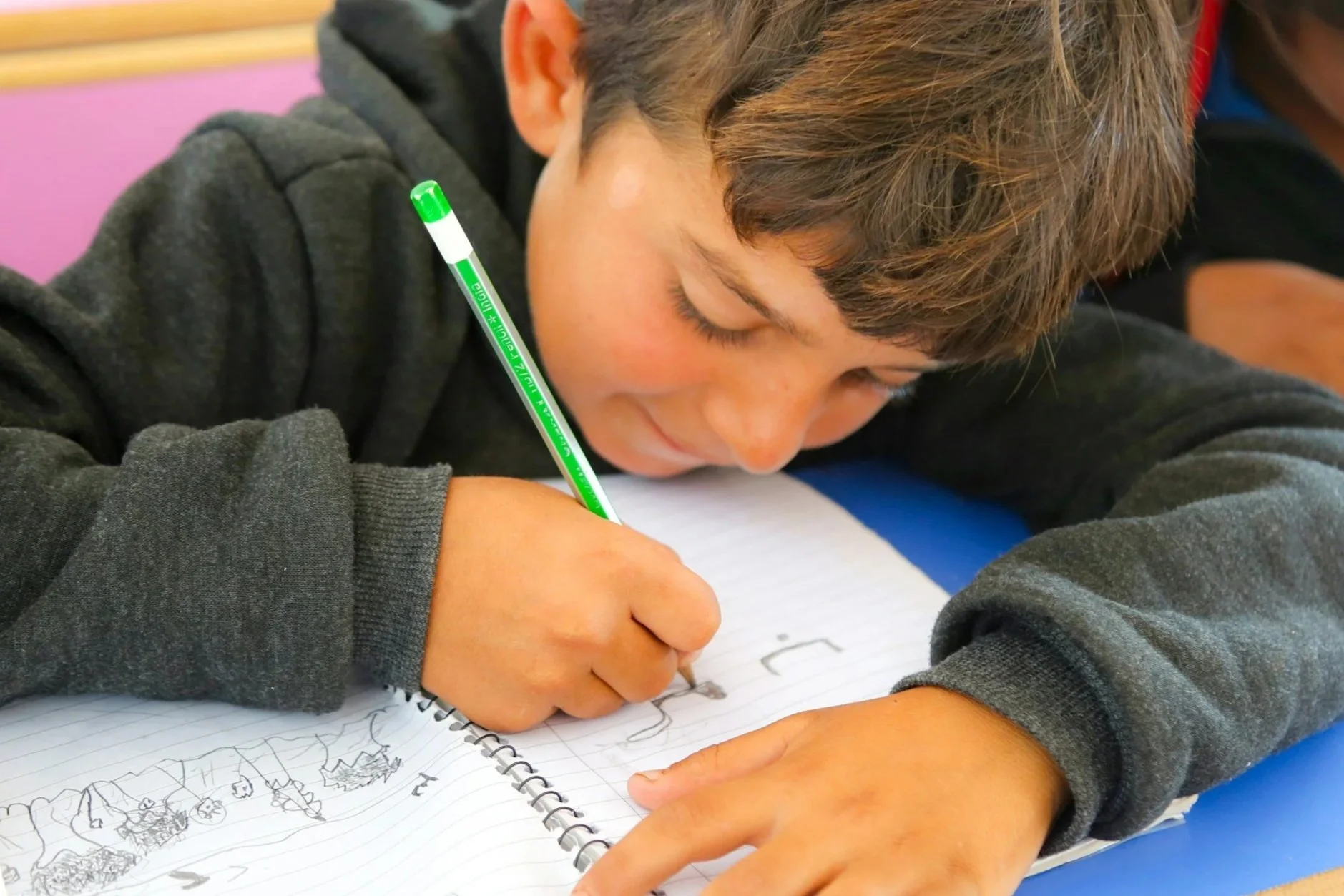
“Their teacher says they're fine at school, but the minute they get home, everything falls apart.”
It’s something we hear from parents often.
Your child gets through the school day. Their teacher might describe them as quiet, cooperative or coping well. Then they get into the car or walk through the front door and suddenly there are tears, yelling, arguments, withdrawal or seemingly enormous reactions to very small things.
It can leave parents wondering: If they can manage at school, why can't they manage at home?
The answer is rarely as simple as a child choosing to behave differently in different places.
School places a huge number of demands on children throughout the day. Understanding those demands, and what it may take for an individual child to meet them, can help us make sense of what happens when they finally get home.
School requires a lot more than learning
Think about everything a child may need to navigate during an ordinary school day.
They may need to:
listen and maintain attention
follow instructions
remember what they need to do
move between activities
cope with unexpected changes
sit or move their body in ways expected in the classroom
manage noise, movement, lighting and other sensory information
interpret social situations
communicate with adults and peers
manage frustration when something is difficult
wait, share and take turns
navigate the playground
keep track of their belongings
manage hunger, tiredness and toileting
regulate their emotions while continuing to participate.
Many of these tasks draw on executive functioning and self-regulation skills, including attention, working memory, inhibition and cognitive flexibility.
For some children, these things happen relatively easily. For others, successfully participating in the school day can require a significant amount of effort.
Looking “fine” doesn't always mean feeling fine
One of the most important things to remember is that what we can observe doesn't always tell us how much effort something is taking.
A child sitting quietly at their desk may be comfortable and engaged.
Another child sitting just as quietly might be working incredibly hard to ignore the noise around them, remember an instruction, work out what everyone else is doing and stop themselves from moving away from their seat.
From the outside, those children might look very similar.
Their internal experiences may be completely different.
This is particularly important for neurodivergent children, although the experience of becoming exhausted by the demands of a school day isn't exclusive to neurodivergent children.
For some autistic children, masking or camouflaging may be part of the picture
Research into autism describes masking as strategies autistic people may use to minimise, hide or compensate for autistic characteristics in social situations.
This can include things such as consciously copying other people's behaviour, suppressing natural responses or using learned strategies to navigate social expectations.
Importantly, we shouldn't assume that every autistic child masks, or that masking explains every difference between school and home.
But for some children, the effort involved in navigating expectations and appearing to cope may contribute to fatigue or distress.
A child appearing to manage well at school therefore doesn't automatically tell us that the school day feels easy for them.
Sensory demands matter too
Schools are busy sensory environments.
There may be chairs scraping, children talking, bells ringing, people moving through corridors, bright classrooms, busy displays, assemblies, playground noise and unexpected touch from other children.
For a child with sensory processing differences, navigating this input can add another layer of demand to the day.
Research involving autistic students has highlighted the importance of the sensory environment at school, including the impact of noise and visual aspects of classrooms on learning and wellbeing.
This doesn't mean that every difficult afternoon is caused by “sensory overload”.
It does mean that sensory demands are worth considering as one part of the bigger picture.
So why does everything come out at home?
By the end of the school day, a child may simply have less capacity available.
They may have spent hours concentrating, navigating sensory and social demands, managing transitions, coping with uncertainty, following expectations and regulating their responses.
Then they arrive home.
Home may also be a place where there are fewer expectations around how they need to present themselves and where they feel secure with the people around them.
So the final trigger may look tiny.
Their sibling sits in “their” spot.
Their snack isn't the one they expected.
They're asked to take their shoes off.
Someone asks, “How was school?”
And suddenly everything feels too much.
The size of the reaction doesn't necessarily reflect the size of that final event. It can be more useful to consider everything that came before it.
This isn't about blaming school
It's also important not to assume that a child becoming distressed after school means something is necessarily going wrong at school.
A child might genuinely enjoy school and have supportive teachers and friends while still finding aspects of the school day demanding.
Instead, differences between home and school give us useful information.
If parents and teachers are seeing very different versions of a child, neither experience has to be “wrong”.
The better question may be:
What is different about these environments, and what does that tell us about the support this child needs?
What can help after school?
There isn't one after-school routine that will work for every child.
The most useful starting point is to observe your individual child and consider what seems to help them recover from their day.
Reduce the questions
We often want to connect as soon as children get home:
“How was your day?”
“What did you do?”
“Who did you play with?”
For a child who is already tired or overwhelmed, answering questions may feel like another demand.
Connection doesn't always require conversation straight away. Some children may prefer some quiet time, movement, a familiar activity or simply having you nearby.
Meet the basics first
After a long school day, consider the simple things.
Are they hungry?
Thirsty?
Tired?
Do they need the toilet?
Do they need movement?
Do they need quiet?
Sometimes supporting regulation starts with meeting very ordinary physical and environmental needs.
Create a predictable landing place
Some children benefit from knowing exactly what happens when they get home.
For example:
Home → bag down → snack → favourite activity → then afternoon routine.
The specific routine matters less than finding something that works for your child.
Consider their sensory needs
One child might want to run, jump or spend time outside.
Another might want headphones, their bedroom and very little interaction.
Another might want to curl up beside a parent.
Rather than assuming there is one “regulation strategy” children should use, consider what your child's behaviour is telling you about what they need.
Be thoughtful about immediate demands
Homework, unpacking bags, showering and getting ready for an afternoon activity may all need to happen.
But if afternoons consistently become difficult, it can be worth considering when these demands happen and whether the routine could be adjusted.
A short period with fewer demands after school may give some children an opportunity to transition from the school environment to home.
Look at the whole day, not just the difficult moment
If afternoons are consistently challenging, try looking backwards.
When are the hardest days?
Is it worse after particular subjects?
After sports days or assemblies?
On days with lots of transitions?
After after-school care?
When lunch hasn't been eaten?
When there has been a change to the usual routine?
Patterns can give us valuable clues.
It can also be helpful for parents and teachers to share what they're noticing. A child who appears to be managing at school may show subtler signs that things are becoming difficult, perhaps withdrawing, becoming unusually quiet, seeking reassurance, avoiding particular environments or needing much more support to complete tasks.
Moving away from “They can do it at school”
When a child demonstrates a skill in one environment but struggles to use it in another, it's tempting to assume:
“They can do it. They're just choosing not to at home.”
But children's performance isn't separate from their environment.
Their available capacity can change depending on fatigue, stress, sensory demands, predictability, the complexity of the task and the support available to them.
Instead of asking:
“Why won't they do this at home when they can do it at school?”
we can ask:
“What's different right now, and what might be making this harder?”
That small shift can lead us towards much more useful answers.
How can occupational therapy help?
Occupational therapists are interested in the relationship between the child, the activity and the environment.
When a child regularly struggles after school, an OT may explore factors such as sensory processing, emotional regulation, executive functioning, daily routines, environmental demands and the child's participation across both home and school.
Support might involve working with the child, collaborating with parents and teachers, adapting routines or environments, and identifying practical strategies that reduce unnecessary demands while supporting participation.
At Bright Path Paediatric Therapy, we provide neurodiversity-affirming occupational therapy support for children and families across Brisbane and surrounding areas.
If your child seems to spend the whole school day holding it together, only to become overwhelmed once they're home, looking at the whole day, rather than only the difficult behaviour at the end of it, can be a helpful place to start.
References
Cook, J., Hull, L., Crane, L., & Mandy, W. (2021). Camouflaging in autism: A systematic review. Clinical Psychology Review, 89, 102080.
McKinlay, M., et al. (2025). Which psycho-social-environmental factors do autistic students identify as being important for positive experiences in mainstream secondary school? A systematic review. Autism, 29(3), 566–578.
Adams, D., Dargue, N., Malone, S., Carroll, A., & Simpson, K. (2026). Are sensory aspects of the built school environment associated with learning or well-being outcomes for autistic students? A systematic review. International Journal of Inclusive Education.
Shields, G. S., Sazma, M. A., & Yonelinas, A. P. (2016). The effects of acute stress on core executive functions: A meta-analysis and comparison with cortisol. Neuroscience & Biobehavioral Reviews, 68, 651–668.