
Sensory Seeking vs Sensory Avoidance in Kids: What It Means and How to Support Your Child
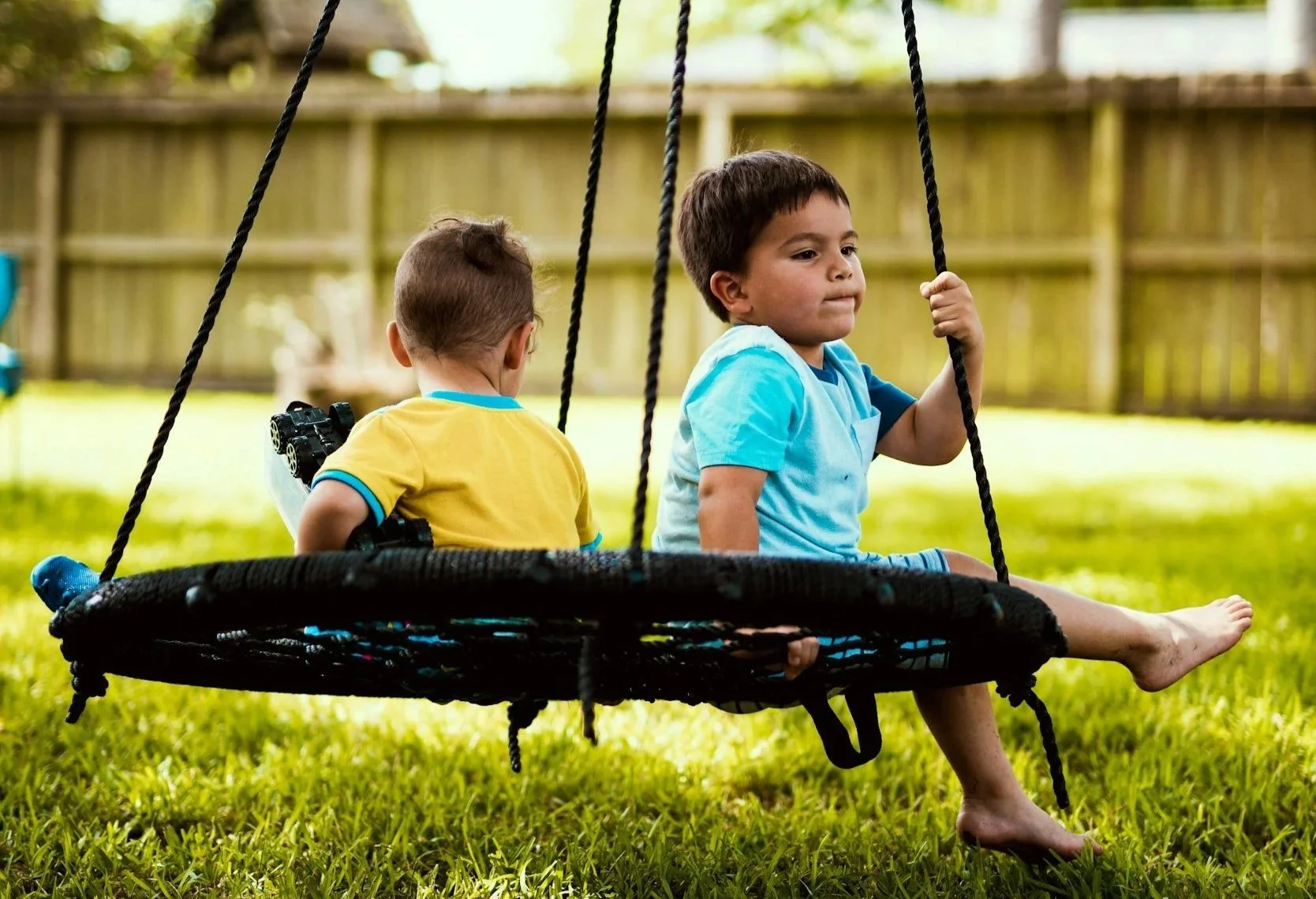
Many children show sensory based behaviours that can feel confusing or intense for parents. Some children are constantly moving, touching everything, or seeking out movement. Others avoid noise, messy play, grooming tasks, or certain environments.
These patterns are often described as sensory seeking and sensory avoiding. From a paediatric occupational therapy perspective, these are not simply behaviours to stop. They are often signs of how a child’s nervous system is trying to regulate and manage everyday demands.
When we understand what is driving the behaviour, it becomes much easier to support the child in a helpful and meaningful way.
What is sensory modulation
Sensory modulation refers to how the nervous system takes in sensory information and regulates the response so a child can stay organised and participate in daily life.
This includes how a child responds to touch, movement, sound, visual input, and internal sensations such as hunger or body awareness.
Some children process this information in a way that makes them seek more input. Others find the same input overwhelming and try to avoid it. Many children move between both depending on stress, fatigue, or environment.
Dunn’s Model of Sensory Processing explains these patterns as differences in neurological thresholds and self regulation strategies (Dunn, 2007).
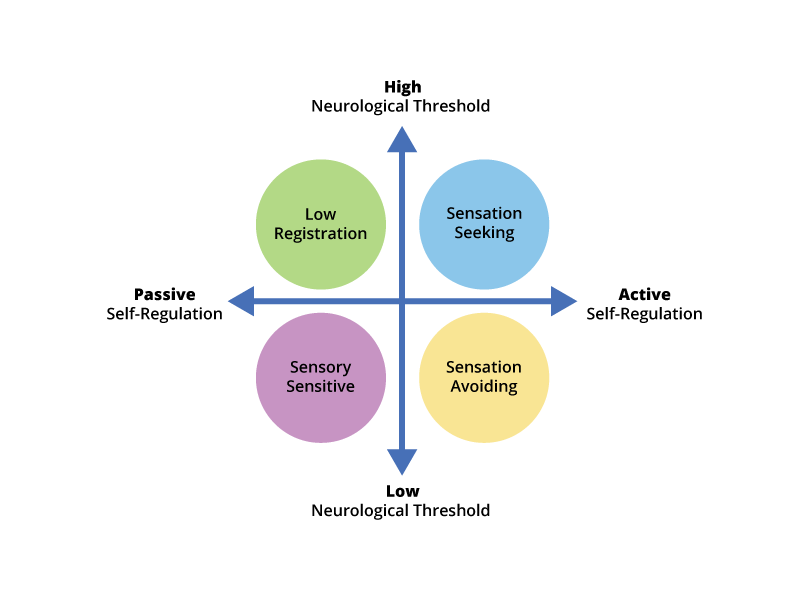
(ConnectABILITY, 2020)
Sensory seeking
Children who are sensory seeking often appear constantly on the go. You might notice:
Frequent movement such as jumping, climbing, or running
Touching objects or people repeatedly
Enjoyment of loud or fast movement
Crashing, bumping, or rough play
Difficulty staying seated for long periods
From a nervous system perspective, these children may need more sensory input to feel organised and regulated. Movement, pressure, and active input can help them feel more grounded and alert.
Sometimes what looks like high energy is actually a regulation strategy (Dunn, 2007).
Sensory avoidance
Children who are sensory avoiding often try to limit or control sensory input. You might notice:
Covering ears in noisy environments
Distress with grooming tasks such as hair brushing or nail cutting
Avoidance of messy play like sand or paint
Sensitivity to clothing textures or tags
Withdrawal or shutdown in busy environments
These children may experience sensory input as intense or overwhelming. Their nervous system may reach capacity more quickly, leading to protective behaviours such as avoidance or withdrawal (Dunn, 2007).
Behaviour is communication
One of the most important shifts in occupational therapy is understanding that sensory behaviours are communication.
A child who suddenly becomes very active during a task may not just be “fidgeting.” They may be telling us that cognitive load is increasing and they need more movement to stay regulated.
For example, a child completing a difficult fine motor task might start moving around the room more. This can be a sign that their brain is working hard to manage attention, planning, and sensory input all at once.
On the other hand, a child who becomes quieter or disengaged in a busy environment may be reaching overload and reducing input to cope.
These responses are often automatic rather than intentional. They reflect the child’s current capacity to manage their environment.

Sensory load and regulation
Every child has a limit to how much sensory and cognitive information they can manage at one time.
When demands increase, such as noise, instructions, social expectations, and task difficulty, the nervous system has to work harder to stay regulated.
At this point, children may:
Seek more movement or input to stay organised
Avoid or withdraw to reduce overload
Show emotional outbursts or shutdown behaviours
These are all different ways of trying to regain balance.
How to support sensory seeking children
The goal is not to eliminate sensory seeking, but to help children access organised, purposeful sensory input that supports participation.
Strategies:
Provide structured movement breaks (jumping, pushing, carrying)
Use “heavy work” (pushing chairs, wall push-ups, animal walks)
Build movement into routines (not just as a reward)
Offer sensory “jobs” (delivering items, wiping tables)
Use visual schedules to support predictability
Watch for:
Constant unstructured movement may indicate overload, not just “energy”
Sudden increase in seeking may reflect stress or cognitive demand

How to support sensory avoiding children
These children often need predictability, control, and gradual exposure.
Strategies:
Prepare for sensory experiences in advance Offer choices (e.g., headphones or quieter space)
Reduce background noise or visual clutter Introduce sensory input gradually
Respect avoidance while gently expanding tolerance over time
Watch for:
Avoidance can escalate when demands increase too quickly
Shutdown behaviours may indicate overload rather than defiance
The role of co regulation
Children do not develop regulation in isolation. They rely on adults to provide co regulation, especially when their nervous system is overloaded.
This might look like:
Slowing down language and demands Reducing sensory input in the environment
Providing calm presence rather than instruction-heavy responses
Helping the child return to a regulated state before problem-solving
Key takeaway
Sensory seeking and sensory avoiding are not opposites of “good” or “bad behaviour.” They are different strategies the nervous system uses to achieve regulation.
When we interpret these behaviours as communication rather than compliance issues, we can better support:
Emotional regulation
Attention and learning
Participation in daily activities
Overall wellbeing
How Occupational Therapy Can Help
Occupational therapy can help you understand what is driving your child’s sensory seeking or sensory avoiding behaviours and how this is impacting their regulation and participation in everyday life.
An OT will look at your child’s sensory processing patterns, identify triggers for overwhelm or seeking, and provide practical strategies to support regulation at home, school, and in the community. This may include environmental changes, co regulation strategies, and tailored sensory supports to help your child feel more organised and able to engage in daily activities.
The goal is to support your child’s regulation and participation, not to stop sensory behaviours altogether.
References
ConnectABILITY. (2020, July 13). Understanding the sensory system and sensory processing. https://connectability.ca/2020/07/13/understanding-the-sensory-system-and-sensory-processing/
Dunn, W. (2007). Supporting children to participate successfully in everyday life by using sensory processing knowledge. Infant and Young Children, 20, 84-101.